Introduction
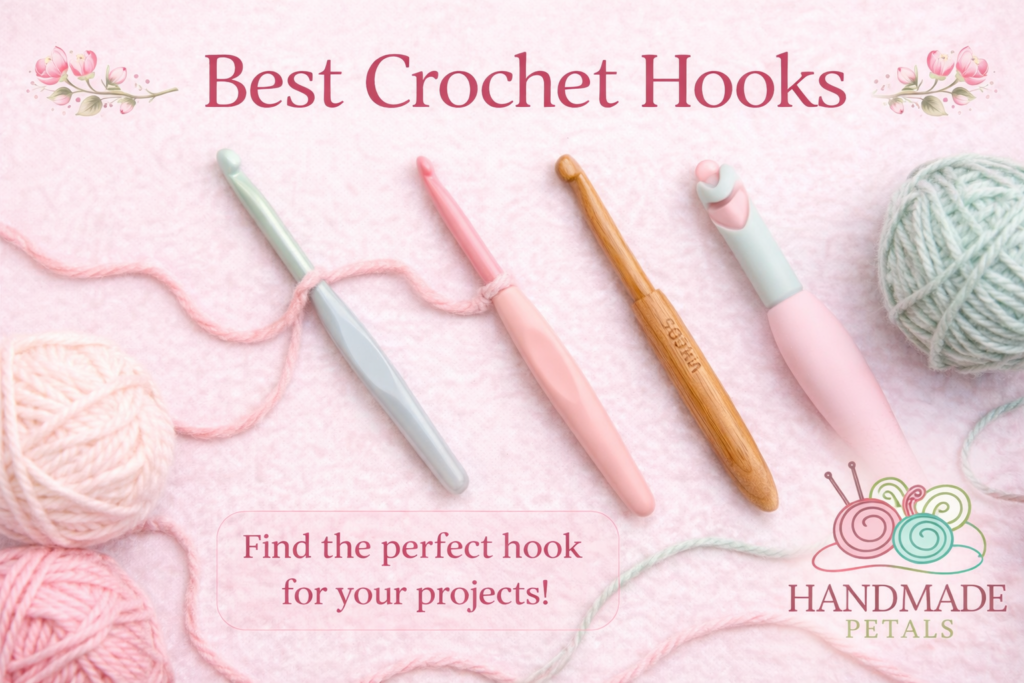
Choosing the right crochet hook is one of the most important decisions you will make as a crocheter. Although it is a small tool, it determines how comfortable your fingers are, how smooth your stitches look, and how fun the whole process will be. Newcomers may begin with any hook in a pinch, but notice eventually that their misplaced choice results in crooked and uneven stitches, slow movement, or painful hands.
The fact of the matter is: not all crochet hooks are created equal. They vary in size and material, shape, and how hard or loose they are gripped, and for some each of these factors will have something to say about you using yarn. Knowing what to look for as these contrasts lets you select tools that are right for your style and your skill level.
So if you are newer to your tool kit or wanting to upsurge your craft, knowing what “good” is for a hook, you don’t need to waste so much time and energy.
What Makes a Crochet Hook Good
Not only does price not define a high-quality crochet hook, the hook is defined by quality. What an example of an effective crochet hook is is how its handling is and how effectively it allows yarn to be transferred. A good hook should feel like something you’re grasping, rather than a thing you’re working on with your hands. Some key qualities that you should actively be looking for include:
- A smooth finish so that yarn glides down, without getting caught.
- Grip that is relaxed and doesn’t stress for any longer.
- So that the hook does not feel heavy or too light.
- Clearly marked size for easy identification.
- Durable: this form does not deform or wear off quickly.
Types of Crochet Hooks
There are plenty of crochet hooks, and each provides a different kind of feel. And each is different. This will help you select which one best fits you.
Aluminum Hooks
Not everybody will remember this, but aluminum hooks are one of the most popular options. They’re smooth, strong, and cost effective and are a great choice for beginners. On their surface the yarn comes to a seamless glide that allows for a smoothness of movement.
Plastic Hooks
Plastic hooks are generally bigger and lighter. They are often used in heavy yarn projects, like blankets or bulky scarves. They are easy to handle but do not necessarily provide the exact result that smaller hooks have.
Wooden Hooks
Wooden hooks have a warm, flexible hand compared to metals. They have greater traction, something that can be beneficial with slippery yarns. But they might not work at the speed of metal hooks when you stitch.
Ergonomic Hooks
Comfort attached hooks are ergonomic. They are typically those with a soft or thick handle, which alleviate pressure on your hands. These also help if you crochet for a long time or have pain.
Select a Size Crochet Hook Which can be Considered the Right Size For Crochet Hook
How the size of your hook affects how your stitches come out dramatically. Even though you want the same yarn, size-wise the hook size makes or breaks the way your project looks and feels. Medium hooks are easiest to work with for beginners as this also gives a great compromise between control and flexibility. Smaller hooks can be tight and hard, meanwhile too large hooks can lead to too loose stitches. A general guideline is:
- Smaller hooks will produce tighter stitches and a firmer fabric.
- Larger hooks create looser stitches and softer fabric.
Before starting out, this makes it useful to practice one size regularly before moving to others. This enables your hands to develop muscle memory.
Crochet Hooks for Beginners
When you start out as a crocheter, for ease and comfort. Use a primitive hook that is so easy to use, and make it your priority the needle needs to connect it to your hands – a beginner’s hook will teach you what stitches are, not why you’re hanging out by the thread. And the ones that start-ups generally like best:
- Easy to grip without falling out.
- Allow the yarn to move smoothly enough for the stitches to stand up easily.
- This weight and harmony should be felt.
When you begin with a feel-good hook it can be a huge difference as you can pick up where you learn quickly. And less frustration and more confidence up so you can build it and give yourself confidence from the start.
Comfort and ergonomic crochet hooks
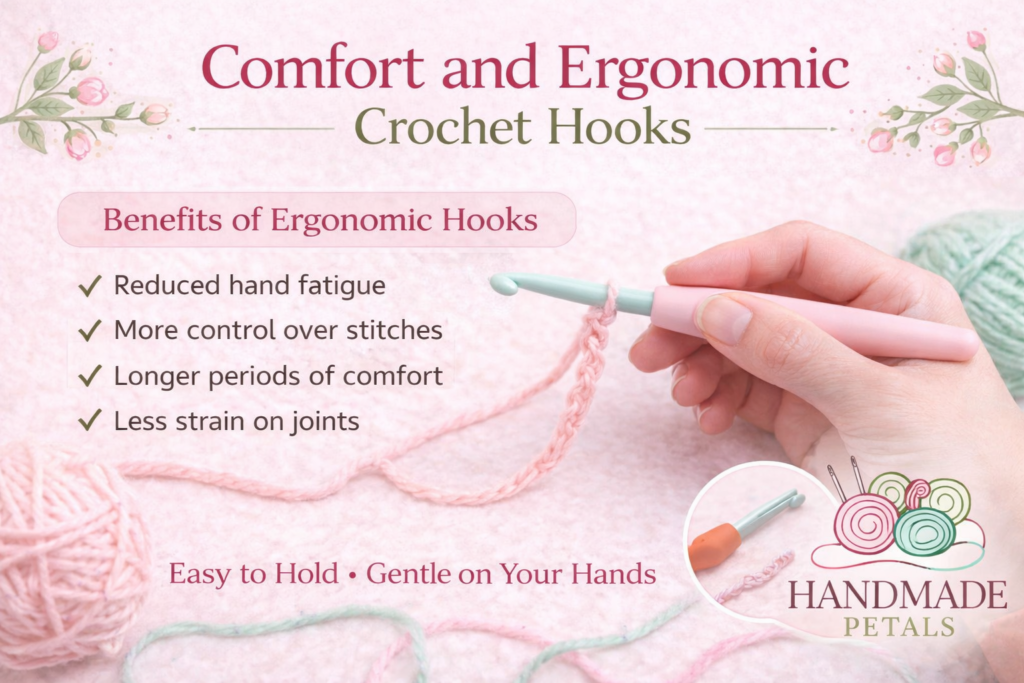
Comfort and ergonomics of crochet hook head and cushiony. As you crochet more, comfort matters more and more. Tapping your fingers, wrist, and hand muscles by holding a hook for hours will stretch them. And this is why ergonomic hooks matter. Ergonomic design looks to reduce pressure and increase grip. Those will likely come with softer handles or thicker shapes that are easier to grip. So that way your hand can remain relaxed instead of tense. Some ergonomic hooks have the following advantages:
- Reduced hand fatigue.
- A little more control over stitches.
- Longer periods of comfort.
- Less strain on joints.
Crochet hooks that are especially good for those who do it every day or who do larger projects.
Crochet Hooks for Hand Pain or Arthritis
For those who have pain in the hand, selecting the right hook is important. An ill-designed hook can overstrain, and a good one can make crocheting a much easier task. Hooks that provide comfort behind the hand often have:
- Thick, cushioned handles.
- Lightweight construction.
- Easy grip surface.
- Minimal pressure requirement.
The right hook helps you crochet again and is comfortable. You may want speed at your discretion: it’s better to prefer comfort over speed and speed, of course.
Inline vs Tapered Hooks
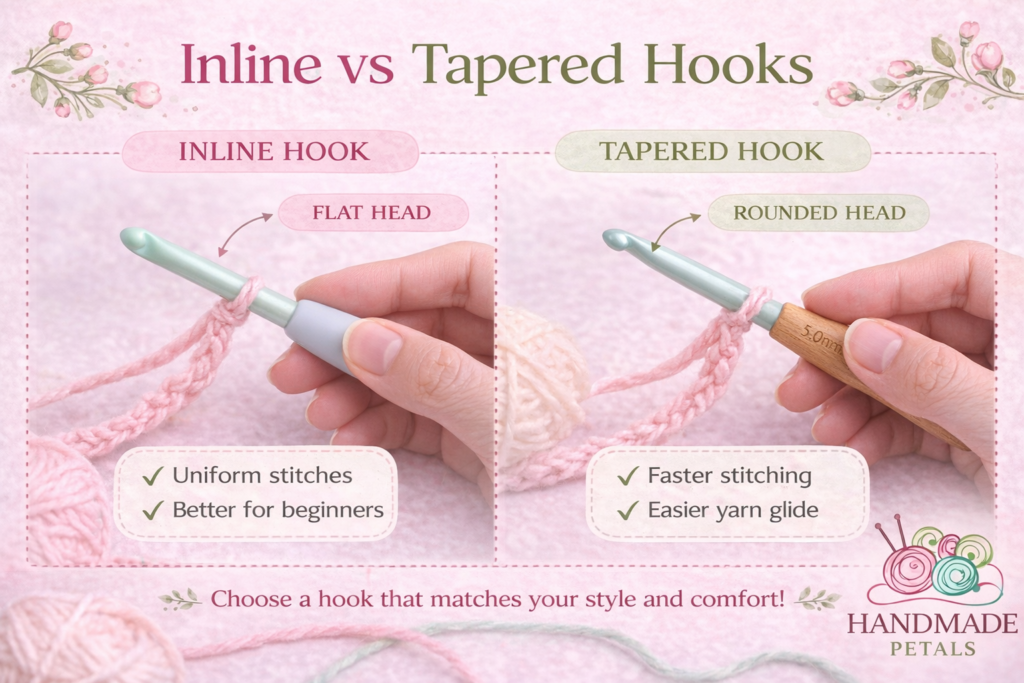
Another consideration is the shape of the tip of the hook. This can also influence the formation of your stitches and how easily yarn shifts. Inline hooks are straight and similar in form. They make uniform stitches, plus give beginners more control over something generally useful.
As well: tapered hooks have a bit rounded heads that let yarn slide along rather easily. They are favoured by those who crochet fast or need a better flow. This style that you prefer, the preference of choosing one over the other, is up to you. Experimenting with those two can allow you to determine which feels a lot more natural.
What is better crochet hooks, sets, or individual hook?
Both of those have their benefits depending on needs of this user. A one-size-fits-all hook is helpful if you would just like one size for you to be able to throw them in, but on the other hand, a set, does everything in a package. A crochet hook kit helps:
- The program is not one size fits all.
- It’s actually more economical.
- It keeps your tools organized.
- It’s flexible as you learn it.
For novices, beginning with just a small set may be doable.
Special Crochet Hooks
As you work through your way, you will meet custom hooks for your work. These don’t necessarily have to be essential for beginners, but they do come in handy in certain scenarios. Some examples include:
- Light-up hooks for use at low light or with dark yarn.
- Longer hooks for Tunisian crochet.
- Smaller hooks for detailed work, like amigurumi.
All these new technologies enhance your list of crochet styles to try and improve your crochet skills.
How Material Can Affect Your Crochet
The material of a hook will influence your yarn. But the nature of how it behaves at the same time while you work will vary from place to location – each material gives its own peculiar grip profile, thus enhancing seam-stitching. Metal hooks move quickly, are smooth and well-organized – they are thus very suitable for fast needle work. Wooden hooks offer more strength and control. Plastic hooks, which are lightweight and suited for large projects. Whether you select the appropriate material will directly impact your comfort, and it has to do with the yarn you choose. Certain crocheters will even switch materials based on what they chose for their projects.
Find the Right Hook for Your style
Every crocheter develops this personal style incrementally. Some of them like those tightened stitches, other them a looser flow. Some are fast enough, and some are slower and more controlled. The best hook for you is the one that is in keeping with the way you naturally move and that is comfortable in your hand. Instead of only emphasizing recommendations, focus on how a hook feels while you are at it. You may find that:
- One hook is a little more smooth than any other.
- Some forms simply help in your control.
- Sizing different sizes alters your stitching rhythm.
Trying to find out what is different helps to see what works best for you.
How to Select the Right Crochet Hook
When you look at a few key factors, then it’s much easier to decide what makes a good choice. Avoid looking for a “perfect” hook; focus instead upon one that meets your need. Keep in mind these points:
- Comfort ahead of fashion.
- If you’re new, start with medium sizes.
- If possible, test multiple materials.
- Try to prevent hooks that are too inexpensive and have very rough edges.
- It’s how your hand feels after using you.
These are easy considerations which can help you prevent common errors.
Common Mistakes to Avoid
Many wannabes don’t choose crochet hooks like that. Knowing about these can help you avoid waste. Some common issues include:
- Making a small hook and tying stitches.
- Selecting a hook that makes the hand uncomfortable to hold.
- Ignoring material differences.
- Buying too many hooks without the knowledge of using.
Just taking a little time to be thoughtful can enhance your experience as a whole.
The Best Way to Crochet
The perfect crochet hook does more than stitch stuff. It is a boost for your entire experience. You can use creativity over technique when your tool comes off as comfortable and reliable (or neither!) A good hook allows you to:
- Acknowledge any discomfort when doing long work.
- Maintain stitches.
- Improved speed naturally.
- Enjoy the process more.
These little improvements add up big time.
Conclusion
Selecting the best crochet hooks, then, is not a matter of coming across a single perfect tool; it is simply about what works best for you. From size and substance to grip and geometry, every little part shapes each way in which you crochet.
Beginners tend to like to start off with a comfortable, medium-sized hook (typically a mid-size). And over time, as you master the system and become used to different materials and shapes, you will learn to use more and more specific ones. Eventually, you will naturally figure out what hooks feel right in your hands.
Crochet is a skill that improves with practice, you can make that happen, so the tools you use should be conducive to that growth. When you pick the right hook, you’re laying a solid foundation on which you can build everything else that comes up in your life.